Why do so many films get women so wrong?
Despite decades of progress, female characters are still too often portrayed as isolated islands: strong, perhaps, but strangely alone. The enduring debate over the Bechdel Test proves just how much this matters. It is not a perfect metric, but it shines a light on a fundamental truth that escapes many male filmmakers: women live in networks, not vacuums.
The Bechdel Test endures because it exposes a persistent cinematic blind spot. Its requirements are simple: a film must feature at least two named women who talk to each other about something other than a man. It is a low bar, yet so many films – classics and flops alike – fail to clear it. Why? Because too often, women are written as satellites orbiting a male protagonist, with no inner life or community of their own. Think of almost any biopic about a so-called “great man”. There is always a woman (sometimes two): the nag, the muse, the long-suffering wife, the alluring distraction. These women exist in a vacuum – no friends, no family, no context – serving only to further the hero’s journey. They are not people; they are narrative devices, non-playable characters in the game of the male lead’s self-discovery.
But the problem is not limited to male-centric stories. Even films with strong female leads can fall into this trap. Take The Banshees of Inisherin: Kerry Condon’s character is rational and grounded, but she is alone. Her only company is her brother and his friends. For anyone who has ever been a woman in a small community, this feels false. Where are her female friends? Her confidantes? The absence is glaring, and it breaks the spell. No woman is an island, especially not on an island. Even in Cassavetes’ Gloria, the central woman is defined by her isolation. She is forced into the role of protector for a child, sacrificing her own life for his survival. The story is compelling, but Gloria’s lack of female support makes her struggle lonelier and more perilous. Her isolation is not just a plot point – it is a reflection of a recurring cinematic fantasy.
This is not about lazy writing – Martin McDonagh and John Cassavetes are brilliant storytellers. But they are also straight men projecting their own ideals of strength: stoic isolation, the lone wolf who needs no one. When these men write women, they often apply the same logic – a “strong” woman is one who stands alone. In reality, most women find strength in connection, friendship, and shared experience. The lone woman is not a fantasy of female independence; she is a projection of male ideals.
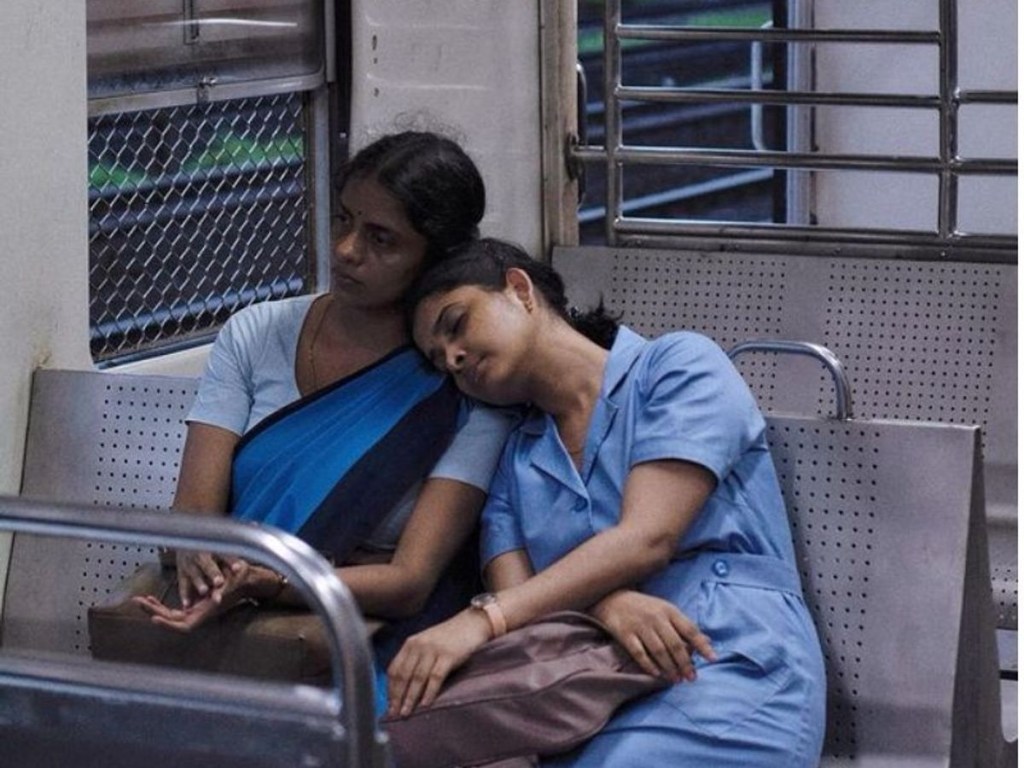
Contrast this with films such as All We Imagine as Light or There’s Still Tomorrow, both written and directed by women. These stories are woven from the threads of female connection: friendship, rivalry, solidarity, and survival. All We Imagine as Light follows three nurses whose lives and desires intersect in ways that feel real and intimate. There’s Still Tomorrow explores not just mother-daughter bonds, but the complex, sometimes fraught, always vital networks women build to survive in a hostile world. Pedro Almodóvar’s films are masterclasses in female interconnectedness. His women are mothers, friends, rivals, lovers – spanning generations and social classes. They are all strong in their own way, but they are never alone, and their stories are richer for it. And, of course, Steel Magnolias remains a classic example of strength found not in solitude, but in solidarity, through laughter, tears, and everything in between.
The Bechdel Test cannot tell us if a film is “good” or “bad”, or if it is truly feminist. However, it does measure something vital: whether a film acknowledges the social reality of women, or erases it. When women are shown as islands, it is not just lazy writing – it is a denial of how women actually live, and a projection of a male fantasy of strength that simply does not fit. The Bechdel Test is a shortcut, yes. But sometimes, shortcuts reveal the shape of the road we are still travelling. Until women’s networks are as visible and complex on screen as they are in life, we will still need it.
 Claire Tavernier